
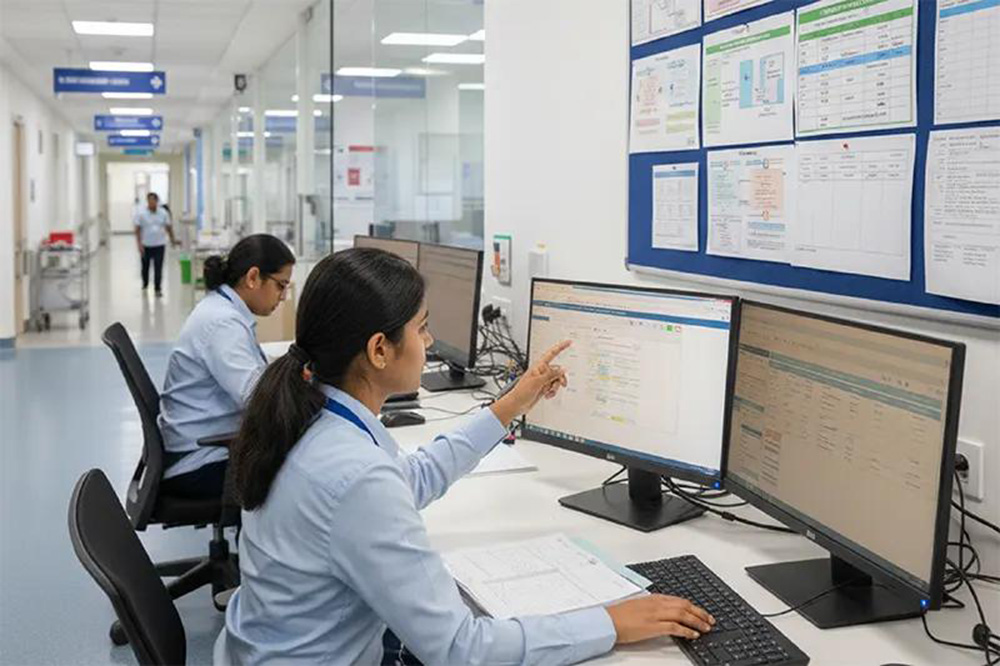
The healthcare sector is among the rapidly expanding industries globally. With increasing healthcare demands, technological advancements, and the need for efficient patient care, hospitals and healthcare institutions require skilled professionals who can effectively manage operations. Although doctors, nurses, and healthcare professionals are essential in patient care, hospital administrators guarantee that healthcare institutions operate effectively and seamlessly.
For graduates seeking a rewarding and stimulating career, pursuing Hospital Administration after finishing their degree offers numerous opportunities. This specialized field combines healthcare knowledge with management principles, preparing students to handle the administrative, operational, financial, and strategic aspects of healthcare organizations.
Hospital Administration has emerged as a highly sought-after career path due to the expansion of healthcare services, medical tourism, corporate hospitals, insurance sectors, and government healthcare initiatives. Post-graduate programs in Hospital Administration equip students with the necessary leadership and management skills to excel in the healthcare industry.
This article explores the major advantages of pursuing Hospital Administration studies after graduation and why it is becoming a preferred career choice among students.
Understanding Hospital Administration
Hospital Administration involves the planning, organizing, directing, and coordinating of healthcare services within hospitals and medical institutions. Professionals in this field ensure that healthcare facilities operate efficiently while maintaining quality patient care.
Countries across the world are investing heavily in airport infrastructure, modernization projects, and airline expansion. Major airports are constantly seeking trained professionals who can handle customer service, security procedures, logistics, airline coordination, and operational management.
Hospital administrators are responsible for:
- Managing hospital operations
- Supervising healthcare staff
- Ensuring compliance with healthcare regulations
- Improving patient satisfaction
- Implementing healthcare technologies
- Coordinating between departments
- Developing organizational strategies
A post-graduate degree in Hospital Administration provides in-depth knowledge of healthcare management, leadership, finance, human resources, and healthcare policies.
Why Choose Hospital Administration After Graduation?
Graduates from various disciplines can pursue Hospital Administration studies. Whether your background is in science, commerce, management, life sciences, pharmacy, nursing, or healthcare, this field offers excellent career prospects.
The growing complexity of healthcare systems has increased the demand for trained administrators who can bridge the gap between medical professionals and organizational management.
1. High Demand for Healthcare Management Professionals
One of the biggest advantages of studying Hospital Administration is the growing demand for qualified healthcare managers.
Healthcare facilities are expanding rapidly due to:
- Population growth
- Increased healthcare awareness
- Rising chronic diseases
- Aging populations
- Medical tourism growth
- Expansion of private hospitals

Hospitals require trained administrators to manage day-to-day operations efficiently.
As healthcare organizations continue to grow, the demand for skilled administrators is expected to remain strong for years to come.
2. Diverse Career Opportunities
Graduates in Hospital Administration can pursue numerous career paths.
Potential job roles include:
- Hospital Administrator
- Healthcare Manager
- Medical Superintendent
- Operations Manager
- Patient Care Manager
- Quality Assurance Manager
- Healthcare Consultant
- Health Information Manager
- Insurance Coordinator
- Clinical Services Manager
- Healthcare Project Manager
- Medical Tourism Coordinator
These roles are available across various healthcare settings, providing flexibility and career growth.
3. Excellent Salary Potential
Hospital Administration professionals enjoy competitive salary packages.
For graduates aiming for a fulfilling and vibrant career, studying Hospital Administration post-graduation provides various prospects.
Factors influencing salary include:

- Educational qualifications
- Experience level
- Hospital size
- Location
- Specialization
- Leadership responsibilities
As professionals gain experience and move into higher management positions, their potential to earn increases significantly.
4. Opportunity to Make a Meaningful Impact
Unlike many traditional management careers, Hospital Administration allows professionals to contribute directly to patient care and community well-being.
Administrators help improve:
-
Healthcare accessibility
Patient safety
Service quality
Operational efficiency
Resource management
By ensuring smooth hospital operations, administrators indirectly improve patient outcomes and healthcare experiences.
This sense of purpose makes the profession highly fulfilling.

- Lead healthcare teams
- Resolve conflicts
- Manage crises
- Motivate employees
- Develop organizational strategies
- Handle complex healthcare challenges
These leadership abilities are beneficial not just in healthcare but also in wider management positions.
Graduates often advance to executive positions such as hospital directors and healthcare executives.
6. Growing Global Career Opportunities
Healthcare management is a globally recognized profession.
Countries worldwide are investing heavily in healthcare infrastructure, creating opportunities for qualified hospital administrators.
Graduates can explore employment opportunities in:
- India
- United Arab Emirates (UAE)
- Canada
- Australia
- United Kingdom
- United States
- Singapore
- New Zealand
- Saudi Arabia
Worldwide, healthcare organizations need experts capable of effectively managing healthcare facilities.
This international demand enhances career mobility and global exposure.
7. Exposure to a Dynamic Industry
Healthcare is constantly evolving due to:
- Medical innovations
- Digital transformation
- Artificial intelligence
- Telemedicine
- Healthcare analytics
- Electronic health records
Hospital Administration students gain exposure to these emerging trends and technologies.
Working in such a dynamic environment ensures continuous learning and professional development.
No two days are the same in healthcare management, making it an exciting career choice.
8. Strong Career Stability
Healthcare is considered an essential service sector.
Regardless of economic fluctuations, people will always require medical care.
As a result, healthcare management professionals often experience:
- Greater job security
- Consistent demand
- Long-term career stability
The COVID-19 pandemic further highlighted the importance of effective healthcare administration and management.
This stability makes Hospital Administration an attractive career option for graduates seeking long-term professional security.
9. Multidisciplinary Learning Experience
Hospital Administration combines knowledge from multiple disciplines, including:
- Business management
- Finance
- Human resources
- Marketing
- Information technology
- Public health
- Operations management
This multidisciplinary approach provides graduates with a broad skill set that can be applied across various industries.
Students develop both technical and managerial competencies, making them versatile professionals.
10. Opportunity to Work with Healthcare Experts
Hospital administrators interact with a diverse group of professionals, including:
- Doctors
- Nurses
- Pharmacists
- Healthcare technicians
- Insurance specialists
- Government officials
- Healthcare consultants
This collaborative environment enhances professional learning and networking opportunities.
Working alongside healthcare experts helps administrators gain valuable industry insights and experience.
11. Contribution to Healthcare Quality Improvement
Quality improvement is a major focus of healthcare organizations.
Hospital Administration professionals play a critical role in:
- Monitoring healthcare standards
- Implementing quality initiatives
- Reducing medical errors
- Enhancing patient safety
- Improving service delivery
Their efforts contribute to better patient experiences and organizational performance.
This responsibility adds significant value and purpose to the profession.
12. Opportunities in Medical Tourism
Countries like India have become major destinations for medical tourism.
Patients from around the world travel to receive affordable and high-quality medical treatments.
Hospital administrators help manage:
- International patient services
- Travel coordination
- Treatment planning
- Healthcare logistics
The growth of medical tourism creates additional career opportunities for healthcare management professionals.
13. Entrepreneurial Opportunities
Hospital Administration studies also prepare graduates for entrepreneurship.
Professionals can establish:
- Healthcare consulting firms
- Medical billing services
- Healthcare training institutes
- Wellness centers
- Healthcare technology startups
- Home healthcare services
The healthcare industry offers numerous entrepreneurial possibilities for individuals with management expertise.
14. Development of Analytical and Strategic Thinking Skills
Healthcare organizations face complex challenges involving:
- Resource allocation
- Budget management
- Staffing shortages
- Regulatory compliance
- Patient satisfaction
Hospital Administration programs train students to analyze problems systematically and develop strategic solutions.
These analytical skills are highly valuable in leadership positions.
Graduates become effective decision-makers capable of managing large healthcare organizations.
15. Increasing Demand Due to Healthcare Expansion
Governments and private organizations continue to invest in healthcare infrastructure.
New developments include:
- Multi-specialty hospitals
- Specialty clinics
- Diagnostic centers
- Rehabilitation facilities
- Telehealth platforms
Each healthcare facility requires skilled administrators to oversee operations.
This continuous expansion creates a strong demand for Hospital Administration graduates.
16. Professional Recognition and Respect
Hospital administrators occupy key leadership positions within healthcare organizations.
They contribute significantly to:
- Organizational success
- Patient care quality
- Healthcare innovation
As a result, they earn professional recognition and respect from healthcare teams, patients, and industry stakeholders.
Their role is critical to ensuring the success of healthcare institutions.
17. Opportunities for Continuous Learning
Healthcare regulations, technologies, and management practices continue to evolve.
Their role is critical to ensuring the success of healthcare institutions.
Hospital Administration professionals regularly participate in:
- Training programs
- Certifications
- Workshops
- Conferences
- Professional development courses
This commitment to lifelong learning keeps professionals updated and enhances career growth opportunities.
Continuous learning also ensures adaptability in an ever-changing healthcare environment.
18. Strong Networking Opportunities

Healthcare management professionals interact with:
- Hospital executives
- Healthcare policymakers
- Industry experts
- Medical professionals
- Government agencies
These interactions help build strong professional networks.
Networking often leads to:
- Career advancement
- Mentorship opportunities
- Industry collaborations
- Leadership roles
A strong professional network can significantly enhance career success.

Future Scope of Hospital Administration
The future of Hospital Administration is highly promising.
Emerging trends driving demand include:
- Digital healthcare transformation
- Artificial intelligence in healthcare
- Healthcare analytics
- Telemedicine expansion
- Population aging
- Preventive healthcare initiatives
- Medical tourism growth
As healthcare systems become increasingly complex, organizations will continue seeking skilled administrators capable of managing modern healthcare facilities.
The demand for healthcare management professionals is expected to grow substantially in the coming years.
Conclusion
Pursuing Hospital Administration studies after graduation is an excellent investment in a rewarding and future-focused career. The healthcare industry offers immense opportunities for individuals who possess strong leadership, management, and problem-solving skills.
From job security and competitive salaries to global career prospects and meaningful contributions to patient care, Hospital Administration provides numerous advantages. Graduates can work in hospitals, healthcare organizations, insurance companies, consulting firms, government agencies, and international healthcare institutions.
As healthcare continues to evolve and expand, the need for skilled hospital administrators will only increase. For graduates seeking a stable, impactful, and growth-oriented profession, Hospital Administration stands out as one of the most promising career choices in today’s healthcare landscape.
By pursuing advanced studies in Hospital Administration, students position themselves at the forefront of healthcare leadership, ready to contribute to the efficient delivery of quality healthcare services while building a successful and fulfilling career.